
Deep Purple once had an unfortunate knack of ditching singers and letting bass players go by default. Founding member Nick Simper was the first to suffer that four-stringed indignity. While I understand the commercial reasoning behind replacing Rod Evans for a more widescreen sounding rock voice in Ian Gillan, I’ve never heard a satisfactory reason for why Simper was ousted. I’ve read that when he’d been in Screaming Lord Sutch’s band alongside Blackmore, they’d both be throwing their instruments round and putting in an all-round wild performance. Perhaps what worked there wasn’t appropriate for the man in black as he quietly orchestrated Purple’s direction towards him being the centre of attention. Either way, Simper moved on, joined Marsha Hunt’s band.
The American singer, based in London, is possibly better known now for the songs wrote about her and those rock musicians she dated, but is worth checking out musically. Simper didn’t feel he was a good fit though, and John Entwistle advised him to form his own band, Hunt counter-offered suggesting he find a new live line-up. This he did, apparently becoming musical arranger in the process, and forming what would become the basis for Warhorse, when later Hunt became pregnant and touring became impractical.
Drummer Mac Poole had turned down Led Zeppelin and would later join Gong. Like Simper, guitarist Ged Peck had done stints with Screaming Lord Sutch, plus The Flower Pot Men (John Lord’s previous band) and early English rockers like Billy Fury. Rick Wakeman was in the frame to become keyboard player, and he and Peck apparently began writing together, though no credited material would surface; he eventually bailed in favour of joining The Strawbs, then Yes, followed by a successful solo career. Ashley Holt had previously tried out as a vocalist for Deep Purple, and when he was heard singing live in a band with Wakeman got offered the Warhorse gig, later reuniting with Wakeman in the English Rock Ensemble. That keyboard role was eventually filled by Frank Wilson, on Poole’s recommendation. From the beginning, here was a bunch of acquaintances that ought to have prevented the fractious egos that Deep Purple has suffered through its career. However, seeking similar fortunes Ron Hire, part of Purple’s management team, came on board.
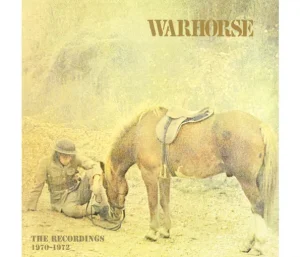
The upshot was two studio albums, originally released on the Vertigo record label in 1970 and 1972, playing the then popular UK college circuit, live dates in Europe, plus TV appearances; some of which have surfaced on Youtube. Now, Warhorse and Red Sea – Under the collective heading The Recordings 1970-1972 – have been remastered, alongside 11 additional bonus tracks of demos and live recordings, and packaged together with one of Cherry Red’s reliably informative booklets on the band.
A disc for each album, plus those bonus tracks on each, Disc One features the self-titled debut that opens with a proto-metal hard rocked riff, that’s a little pedestrian but perhaps saved by back-stepping snazzier chords sections. I found many similarities with early Atomic Rooster on ‘Vulture Blood’, not so much the style of keyboard playing though. The vocals bellow away and may put some off, before Holt’s voice lets rip with a series of soaring anguished screams, demonstrating he’s a range, just needs to apply if more deftly. Lyrically, as here, several numbers take the ‘that-woman-done-me-wrong route’, and sometimes too many actual words used, meaning they get in the way. There’s an instrumental passage where mainly keyboards but also guitar offer prettier melodies. It’s a song of confusion, both a little in theme and for the listener. There’s something not quite right here, but it also intrigues, and if you’ve the patience, as you listen to each number it all becomes much more palatable.
With something of a classic bolero intro, ‘No Chance’ turns into a mournful ballad. It’s not unlike Uriah Heep’s take on ‘Come Away, Melinda’ from their own debut that had come out a few months earlier, where Poole’s studied drumming moves the piece. However, just as rising harmony vocals further that Heep comparison, the pace quickens and it all changes, so much so it could accompany some cowboy chase scene at the movies. There’s another instrumental section, as the first of several patterns start to emerge- Wilson’s keyboards taking in jazzier moments while Peck’s guitar takes up an interesting choice of notes. Pseudo classical intros continue, following in the style of The Nice for ‘Burning’ but again it’s a false direction as suddenly Peck’s guitar hits the funk factor; clear-toned but Hendrix influenced, it rides over the kind of ‘Mandrake Root’ beat Simper’s old act Deep Purple often favoured, save there’s a hell of a lot more interesting bass work to the forefront, and amid more Heep-stacked harmonies, Holt let’s rip with his higher register again, offering a voice bearing similarities to the newer version of Purple, with In Rock hitting the stores but a month previous. Much as that makes sense, it also works, while they take another extended instrumental break, and this is really where the distinctions between the bands, whereas Purple tended to have musicians step aside as one or other soloed, Warhorse perform more as an ensemble on record.
Listening to the tracks as they originally appeared on vinyl, that each track tends to offer something more appealing is not simply because one’s becoming accustomed to their sound. The combined ability of being able to access now rare records and with the luxury of hindsight, also offers us so many ifs and buts whereby in some parallel world the band might have grown to be bigger than they were. This strange dichotomy is best illustrated by ‘St. Louis’, an Easybeats cover – A speedy Sam & Dave style soul shuffle, Holt particularly excels here as it shows his earlier musical aspirations admirably, while the band get behind it completely while even the more British beat-pop backing section give it a certain charm, but then they twist the dial that little bit further for a crazy freakout near the end. Released as a single it was perhaps a year or two late for mainstream acceptance, but still proved a hit in Holland.
‘Ritual’ that follows is at once a throwback to Purple’s ‘Wring That Neck’ and What’s Going On Here’ that they’d record some years down the road. It’s remarkable how the tone and certain turn of phrases Peck applied on guitar had more in common with Richie Blackmore’s playing than the millions of devoted acolytes that have followed, however, the choice of notes he puts together is his own. Both, probably had similar influences that they took in different directions. ‘Solitude’ is another Heep come Spooky Tooth ballad, but even more so sounding like something that could’ve influenced Rice & Lloyd Webber’s Jesus Christ Superstar. These simple tales, perhaps inspired by the Hermann Hesse existential philosophical loss of the times, while feeling somewhat dated to me personally, might actually find favour with this generation’s wellbeing bandwagon. Again, it’s the unity of the band as they play together where this one works for me.
The band’s debut album concluded with ‘Woman Of The Devil’. Opening dramatic and eerily, the tempo increases then as Simper sets the template on bass and we’re led into a hard rocking number that moves from taught to fluid motions of creativity and rage. There’s something of the Atomic Rooster here again, but Holt’s pitched howling recalls their previous incarnation as The Crazy World of Arthur Brown, whose lead singer was as much an influence on Ian Gillan. In truth, the musical compatibility here far exceeds Purple, delving into true progressive rock territory. What Warhorse possibly lacked were enough short rockers of the type then in vogue.
Of the four bonus live tracks on Disc One, the rendition of ‘Ritual is more spirited in performance, the opening to ‘Woman Of The Devil’ uncannily pre-empts Deep Purple’s own live version of ‘Child In Time’. Demo track ‘Miss Jane’ is a pop tune with some interesting melodies, with a slight Brit take on country rock, and may well have been them trying to write a chart hit, but getting carried away with actually playing and laying on the harmonies. Hearing it, it’s easy to mistake it for something by The Gods, Hensley and Kerslake of Heep heydays’ previous group.
Bones of contention saw Peck leave the band to focus on an acoustic musical career, until his passing in 2015. “Personality conflicts and control issues” are the reason given in the collection’s booklet, but don’t really expand on that, and that the band would intermittently reform for one off-gigs in later years seems no long term grudges were held. His replacement, one Pete Parks, came from a band called Black August.
Second album Red Sea had its budget cut halfway through recording, the album cover with their heads mounted on a ship’s prow is similar to In Rock, but the similarities are beginning to fade. Even so, that missed opportunity were happening is evidenced on the song ‘Confident But Wrong’. They still had an emphatic fondness for that early Purple style beat, as evidenced on the ‘Red Sea’ title track of their second album but the band was also moving on – It took the pop psychedelia approach of Cream when in the studio, Holt’s voice far subtler here is in drawn in close to the instruments in the mix, while musically it expands to the prog sensibilities of, say, early, Yes. There’s a real cool groove to this one. You can see several directions the band could’ve started heading out in, only, original label Vertigo started cutting the budget and on some of the subsequent tracks you start to think “What if” a little too often.
‘Back In Time’ is another number where I feel the influence of Atomic Rooster. A mid-paced unrelenting drive, that has a science fiction approach lyrically, then some two minutes in there’s a crash of power chords followed by a long guitar solo that plays in the same creative ballpark as Led Zeppelin’s ‘Dazed & Confused’ minus the bow, but also makes you wonder if Brian May got hold of a copy because there’s an awful lot that also sounds like ‘Brighton Rock’. Maybe there’s also something of ‘Beck’s Bolero’ and the latter part of ‘Whole Lotta Love’ thrown in there, but it actually holds together quite well.
‘Confident But Wrong’ is a rhythm ‘n blues number of the kind Holt excels at, Peck’s guitar heavy enough to keep older fans on board, and the band tight, although you do notice Simper’s lower in the mix this time round. It’s another number where there’s instrumental fluidity between guitar and keyboards, and again extending into more determined progressive rock areas. As it return to the main song, Holt really belts it out vocally right up to the fadeout. With Wilson on piano, ‘Feeling Better’ feels that way right from the start. There’s something of the rock theatrics of the times then beginning to surface about it, and it wouldn’t be out of place within a musical show even today. Ballad as such, it’s only three minutes in as the harmonies start that you realise, they have been missing on this record until now, and as they repeat “The very good times we had,” Holt screams away, before they return for a more forceful last verse, where Holt sings lines like “I’m pleased you’re gone” and you realise he’s back in a familiar woman baiting territory.
Bass pumping us into ‘Sybilla’, twin guitar melodies play nicely, but it’s basically a laidback mid-tempo rhythm ‘n blues workout, where Holt tries too hard vocally, playing with his harder brogue, different intonations, unnecessary wails and an echo on his voice that’s not required. Frankly this is more like a demo than the actual ones presented fresh for listeners on this collection. The instrumental opening for ‘Mouthpiece’ steers towards interesting progressive rock territory, a little Beggars Opera here, even some Santana in there, but the subtext is with the budget cut, and not enough material written it chiefly features as a drum solo. Not a bad one I have to say, in that much of its takes classically orchestrated approach so there’s a sense of balance initially, before some tomfoolery sections prevail, but I’m not one for them as a being a good idea in general. Despite which, I will make the serious suggestion that anyone purchasing this collection, at least once focuses on Poole’s playing throughout. What he brings to the table in general, is both understated and amazing.
Something similar can be said of ‘I (Who Have Nothing)’, yes, a cover of the Shirley Bassey hit – It’s not quite as overwrought as you might imagine (Say how Queen did ‘Big Spender’), and far from middle-of-the-road at the same time. Holt gives it a serious emotional vocal delivery, and there’s the welcome return of harmonies here, quiet tender ones actually. It’s a little bluesy, while also treading the line between Ziggy and Diamond Dogs-era Bowie. More rock theatrics, really. It’s an odd one to end on, but it’s outrageously good in its own way.
Of the bonus tracks on this disc, they’re mainly demos, featuring Barney Jones on drums. Putting the lyrics to one side, ‘Bad Time’ is an upbeat little number, the vocal harmonies echo Cream on ‘I’m So Glad’ over some pop rock boogie manner, but with some great musical asides, not unlike what we’d hear once Camel came into being. ‘She Was My Friend’ is a country rocker come ballad, before edging into more out-there territory, ‘Gypsy Dancer’ is similarly quite soft, whereas ‘House of Dolls’ is a rawer horror rock number. The last one out the box being ‘Standing Right Behind You’ that’s a little like Manfred Mann’s Earthband in rock mode before delivering the power chord sequence to Elton John’s Saturday Night’s Alright (For Fighting) 12 month before anyone heard the Goodbye Yellow Brick Road album.
Following the Red Seas album release, further strife ensued with Vertigo, but they managing to get out of that deal and Warner Bros became interested only for an oil embargo to send fears across the record industry of potential vinyl shortages, and what they had needed to be spent on those rock stars already making shedloads of money for them. The demos collected here landed them a potential record deal with a Tamla Motown subsidiary label, only Jones and Holt went off to join Wakeman, and with that, Warhorse called it a day.
The band reformed for occasional gigs in the proceeding years, but too often when recalled they’re considered dangling on the thinner branches of Deep Purple’s family tree. Yes, there are similarities, but more so Uriah Heep, and less for the organ more the vocal harmonies. In truth, the rockier stuff they did wasn’t that good, the progressive stuff more so, and as Holt learnt to rein in his voice more, and there became a similarity to the pop -soul of The Congregation who scored a hit with ‘Softly Whispering I Love You’.
Nick Simper was involved in The Recordings 1970-1972 coming together, and he makes several well observed comments on how luck can swing either way in a band coming together and finding success, and one warms to his self-depreciative comments in the booklet, while enjoying him giving it some on bass on many a track.
- Warhorse – The Recordings 1970-1972 is released via Cherry Red Records and is available here.
Track List:
Disc One – Warhorse – Remastered
1. Vulture Blood
2. No Chance
3. Burning
4. St. Louis
5. Ritual
6. Solitude
7. Woman of the Devil
Bonus Tracks:
8. Ritual (live)
9. Miss Jane (demo)
10. Solitude (live)
1.1 Woman of the Devil (live)
12. Burning (live)
Disc Two – Red Sea – Remastered
1. Red Sea
2. Back in Time
3. Confident But Wrong
4. Feeling Better
5. Sybilla
6. Mouthpiece
7. I (Who Have Nothing)
Bonus Tracks:
8. Ritual (live)
9. Bad Time (demo)
10. She Was My Friend (demo)
11. Gypsy Dancer (demo)
12. House of Dolls (demo)
13. Standing Right Behind You (demo)

