
 Originally coming to prominence as an integral part of New York’s experimental rock band Swans, avant-garde artist Jarboe has had an equally exploratory solo career and has left a trail of albums that are equal parts challenging and accessible. Latest album Sightings (reviewed here) is no exception and evidences an artist at the peak of her powers. Taking time out of a busy schedule, we managed to grab some time with Jarboe before her gig at Coventry’s Just Dropped in venue (reviewed here). Read on to get the low down:
I understand you were born and raised in Mississippi?
I was born there, and we moved when I was quite young and I grew up between Mississippi and Louisiana where my family had relatives.
I think we are all a product of our environment and the American South has a very strong musical heritage. How did that environment shape you as an artist?
I think it was specifically the culture of singing and dancing and the folk stories I was told as a little kid. In New Orleans there were street dancers who would perform on top of soapboxes, and the Mardi Gras, all that was influential to me. I took it all in as a little kid when we’d visit New Orleans.
When I think of New Orleans it is of opium dens, black magic and voodoo, it has a very dark aesthetic. Did that play into your sound.
Probably as a little child, it did for sure. It all seeped into my imagination, especially seeing the tap dancers on top of the boxes; that seemed kind of magical.
When you were older you moved to New York. That city was a lot more “Taxi Driver” in the 1980’s and it must have been a culture shock arriving there.
It was beyond brutal. Where we lived with the band was in abandoned buildings, there was no glass in the windows, there were “shooting galleries” which is the term for people using drugs. There were a lot of pushers on the street and they’d all have different ways of communicating; calls and whistles to indicate whether passers by had come to score or were just walking past. So I had to get used to that environment which was very different to the one I had grown up in. It was very dangerous and I saw everything you could think of. I wrote some lyrics for Justin Broadrick’s project Jesu [the EP Lifeline, track ‘Storm Comin’ On’] based upon snippets of what I saw; opening the door of our rehearsal studio, where we also lived, and you’d find used needles and puddles of urine, and this was an everyday occurrence there. When I first arrived, taxi cabs and delivery drivers wouldn’t even come to Avenue A. Where I lived was Avenue B, and Michael [Gira, Swans] would always say, “When you leave the building turn right, never go left to Avenue C!”. It was horrible, we’d record on Second Street and we’d always take the long route to avoid certain areas, I can’t begin to describe how dangerous it was.
So landing in New York. What kind of artistic tangent did it send you on?
At that time in the East Village, it is very different than it is now; it’s affluent with fancy bars, students coming in from NYU, people paying as much as $12,000 a month for a room. So, when we were there it was kind of like the pioneers moving in, taking abandoned spaces and store fronts and living there, it had a supportive culture between artists and that’s not there any more. I think it was the sense of community we experienced there, and I met a lot of cool people. It was very exciting because these were artists I was aware of, so it was amazing to immerse myself into that culture. It was exciting in the fact that it was dangerous! [laughs]. Because of that I learned a lot; how to walk down the street without getting mugged and I think that saved me. Almost everyone I knew, including members of Swans, had a knife held to their throat and their money taken, but thankfully I never did.
You mentioned in previous interviews that Michael Gira helped shape you as a vocalist. How else did he shape you as an artist?
I can’t even begin to describe how important he was. I was dabbling in experimental performance art before I moved to New York and I was starting to stretch what I could do with my voice. Before I met Michael I sent him a tape of all my stuff as an introduction package. I had heard [the Swans’] ‘Power For Power’ on the radio and I was intrigued, I’d never encountered anything like it, it was tribal and primitive, then I studied the lyrics and understood about the power dynamics at play. When I went to New York, it was to interview Swans for an art zine, but my other motive was to join them and become part of the Swans. To achieve that I would do anything; by 1984 I was a roadie for them, I was straight edge, I didn’t smoke or do drugs, I was a vegetarian, and I was the only one like that in their circle, so I was very helpful. When the bass player quit, I was going to contribute bass, but Michael said to learn sampling to create textures, I auditioned for the band and it was decided that I was in the group, at the time it was very male…very male!
In terms of the vocalising, Michael would take advantage of whatever you’d bring to the table; I’d had classical training with my voice, I had performed light opera as a kid, and as a first introduction Michael had me do two things; firstly, the blood-curdling scream on ‘Time Is Money (Bastard)’, then the choral vocals on ‘Greed’ and Holy Money, and without any fake intervention, just adding layer upon layer of different notes. That led me into the fray, those first tours were brutal, playing in front of hardcore audiences, the skinheads didn’t like me and I was treated badly for a long time by rather hostile crowds. As I got more involved with the music, it evolved with melody, song structure and chords, away from the industrial sound, we attracted a different type of crowd to the shows. In place of the skinheads, women would come, and people would gather around my part of the stage, I started to develop my own audience within the group, and that led to me doing lead vocals. I’ve said it before, but me joining the band with my background changed the sound, the fact that the music opened up was because of what I brought to the table.
Listening to Swans and attending the shows can be a very intense experience. What was it like as an artist living inside that bubble of intensity?
Being straight edge helped. I would go for long walks. I came with a martial arts background so I had a posture that meant no one messed with me.
After the Swans you were fired out into the world. That must have been daunting?
The thing is, I had always done my own music. The boys would go out to bars after rehearsal, but I would stay in the space and that’s what led to The Thirteen Masks and all the solo albums I did while in Swans, so I always had that outlet, I could be much more of myself outside the context of Swans. So that portal was already open, my need to express myself more. Michael liked much of the work I did, but back then he was very strict, it was very much his way or the highway. I was told how to stand on stage, how to wear your hair, sometimes he even said I was too theatrical on stage, it could be very dictatorial. So, there was a freeing moment for me, on the last tour we did I really took things to the nth degree, I made things as theatrical as I could because I knew there was no way he could stop it! [laughs]. And a lot of people have told me that was the greatest era.
I find your sound very cinematic and I am surprised that you haven’t scored more films. Is that a creative area you’d like to explore?
It’s always something I’ve been invited to do, I’ve never sought it, but if the time is right, I’ll do it. There have been opportunities in the past, big directors in Hollywood, but then those people lost their positions of power. I’d consider working on films, but those people would have to come and find me.
Your new album, Sightings, has just been released. How do you set about writing a record? Do you sit down with a specific idea, or wait until the muse comes to visit?
I don’t believe in the whole muse thing. I’ve never needed inspiration or a muse, what happens is ideas fly into my head, certain words that I’ll jot down and later they’ll be useful. In terms of music, if I’m at the keyboard I’ll sit there and I won’t leave, I’ll modulate sounds and that will keep me there for a long time, I’ll save that and revisit it later. It’s a spontaneous methodology; I have a song called ‘Dear 666’ because I was studying the Stockholm syndrome and why people stay in abusive relationships, and that song just came to me; I was literally just getting up and putting bread in the toaster and the music and lyrics suddenly came to me, but that’s rare. The thing I did for Justin [‘Storm Comin’ On’] came really fast because I was inspired by his guitar. The Neurosis album [Neurosis & Jarboe, 2003], those lyrics were taken directly from journals, one song was about my mother, the other about my father, and that was special because it was their music along with my adaptive, personal writing and I think that was a very successful project.
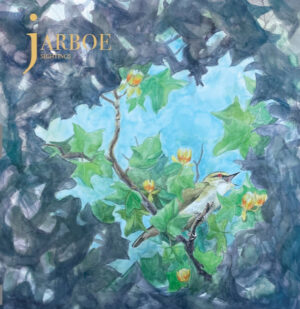
When I was in New York a lot of words would come from that environment. Incredibly colourful characters would be walking by and you’d catch little fragments of what they were saying, I don’t think they were crazy, more extreme personalities. The song on the Neurosis album, ‘Within’, that was from a guy walking down the street shouting ‘God, you can come and take me now!’, so I changed it to something more sinister, a little more aggressive. The rap version of ‘Girl Come Out’, that was also taken from a street lady and I incorporated her situation into a song. For the latest album Sightings, the track ‘Vireo Serenade’ was just total inspiration, I could have done an album just about Vireo because that’s how much I love him…but I had to cut him off at seven minutes! [laughs]
Tone and timbre also seem very important to you. How long to you spend on getting the right notes?
It’s mainly intuitive. I consider myself a vocalist who uses different voices. It’s just the character, persona or the person telling the story who uses the voice to take you within.
How precious are you with your own work? Once it’s out in the world it doesn’t really belong to you any more.
Personally, I don’t really listen to it after I’ve finished it. Obviously I work with it in the live setting and I listen to the mastering, but after it’s released I don’t obsess about it. I am doing this thing now where I revisit an old song and rework it. On Sightings I took ‘Of Ancient Memory’, a song from an old album and it it in a very different way, with a tone poem that is very haunting. I think I’ll keep doing that, revisiting my own catalogue [laughs].
How about when you’re playing live, do you aim to replicate them as closely as possible, or put a new spin on them?
A totally new spin. Originally the set was created with my friend Thor [Harris] but he became ill and was unable to join us, so what we had to do was take away the dynamic of the pieces, which was dependent on the percussion and we had to rework them and Joy [Von Spain, piano] has done a wonderful job with that, meaning the whole show changed with that unexpected development.
Finally, if you could impart one lesson you’ve learned from your career to a young person starting out in music today, what would it be?
That’s a hard question to answer because the whole methodology has changed since I started out. Nowadays you can record in a bedroom and create an incredible sounding album. I’d say stay determined if you want to digital and analogue, and why not do both? But nowadays it’s a whole different world, I use DistroKid, a digital distribution service and send my music all over the world. Anybody can do that, and that’s a big change. Nineteen Eighty-Four! [laughs]
Connect with Jarboe: Official Website

